Note No. 02 · Visual demonstration
You can start nature study from your own doorway.
The forest is optional. The noticing is not.
The belief
Nature study needs a forest, a field trip, or a special destination.
What we say instead
Neighborhood, sidewalk, patio, and porch step all count.
Most photographs of nature study are lying a little. Golden light, deep woods, a child in wool. It is beautiful and it quietly tells you that if you do not have that, you cannot begin.
Early-childhood guidance is much less romantic about this. Neighborhood walks, playgrounds, patios, and urban corners are treated as legitimate places to look closely. A short outing, adapted to whatever a family can actually manage, still counts.
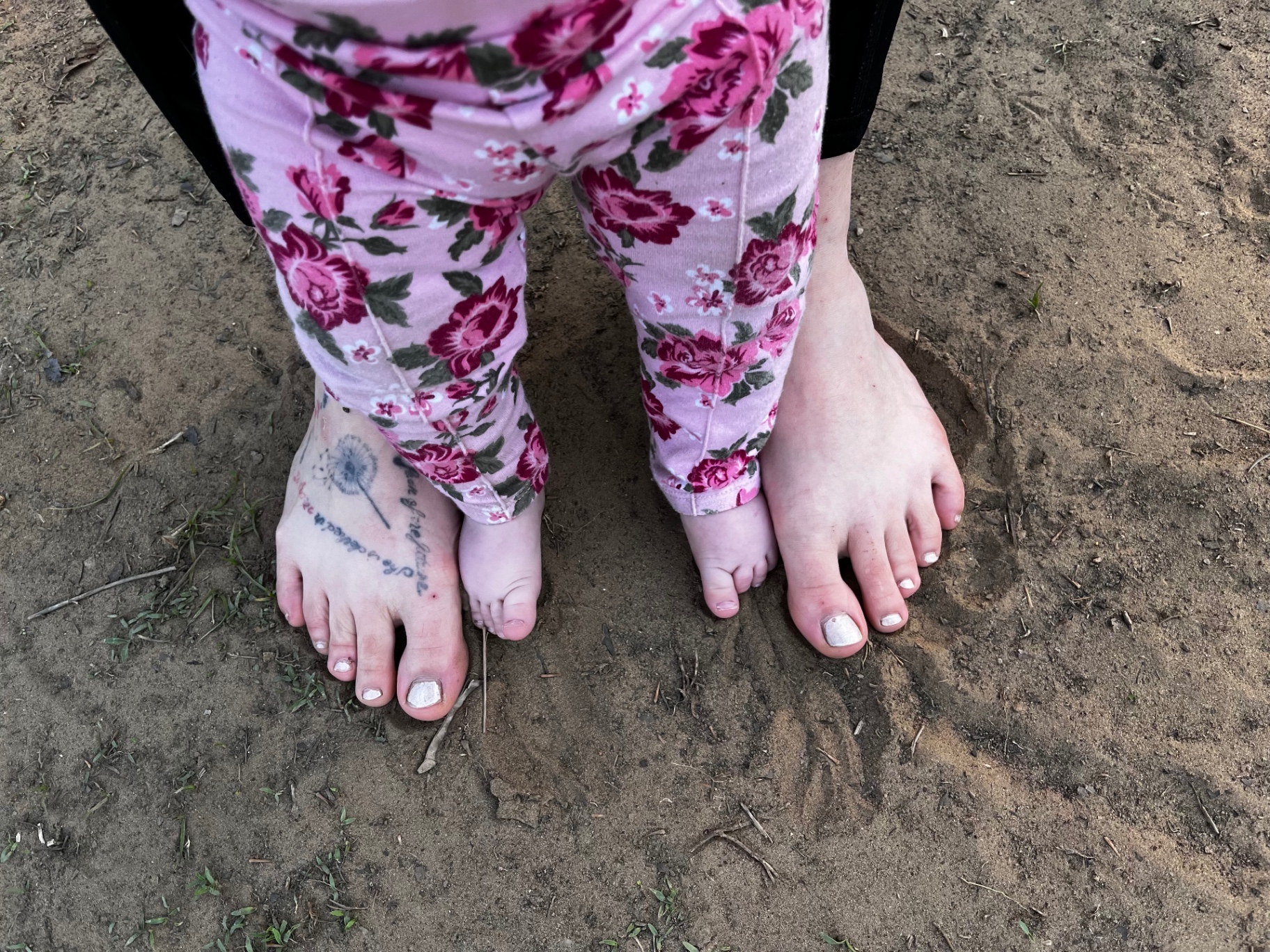
Our own week is mostly sidewalk. There is a strip of weeds by the mailbox that has produced more questions than any state park we have visited. Ants. A snail shell. The dandelion that grows flat against the concrete because it gets stepped on.
If you cannot get outside, the view from your window still counts. Put a tray on the sill. One object at a time. Look on Monday, look again on Thursday, and let the child tell you what changed. That repetition is closer to real science than a single perfect trip.
I am not going to assume you have a yard, a safe place to collect, or the free hour it takes to get anywhere. That is the point. The smaller the required setting, the more days of the year this works.
Try this week
- Choose one square of ground you pass every day and visit it three times this week.
- Keep a small tray by the window with room for exactly one find.
- Photograph the same view once a week and compare in a month.
What this rests on
- NAEYC — Fresh Air, Fun, and Exploration
- NAEYC — Turn Any Walk into a Nature Walk
- U.S. Head Start — Nature Walk and Roll
- OCEANetwork — Adding Nature Study to Your Homeschool
These sources support the general practice of hands-on, nearby observation. They do not measure any printable of ours, and we do not claim a developmental outcome from a single page.