Note No. 04 · Comparison
Two ways to use a nature page. Only one begins on the page.
What academic-looking work costs a four-year-old.
The belief
Preschool learning has to look academic to count.
What we say instead
Play-based, joyful, hands-on inquiry is the developmentally appropriate stance.
Here is the first way. Sit down. Here is the sheet. Trace the word leaf. Color the picture of the leaf. Well done, that is finished, put it in the folder.
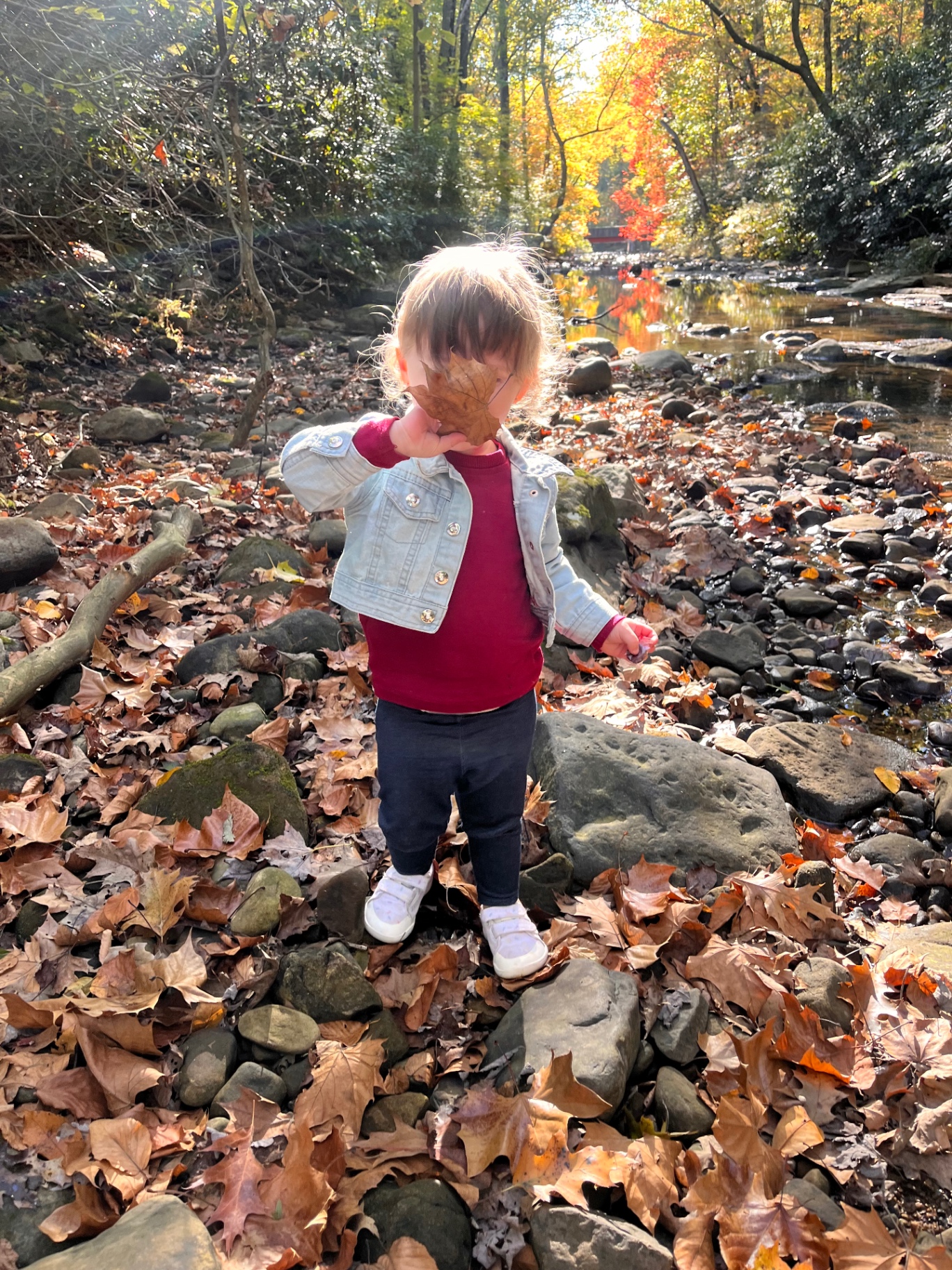
Here is the second way. Go find a leaf you like. Bring it back. Now we will hold it up next to the picture and see what is different. Yours has a hole in it. Who made the hole?
Same paper. Entirely different afternoon. The first begins and ends on the page. The second uses the page as a place to keep something that already happened.
Professional guidance in early childhood keeps pointing to play, joy, and engagement as the conditions where learning holds. Pediatric guidance says something similar about active, playful discovery. Neither of those says a worksheet is forbidden. They say the worksheet cannot be the whole event.
For anyone answering to a curriculum requirement, the reassuring part is that the second version produces more to document, not less. There is a specimen, a question, a drawing, and usually a sentence worth writing down word for word.
Try this week
- Reverse the order: object first, page second.
- Record one sentence the child said, verbatim, on the page itself.
- Keep the specimen taped beside the drawing so the two stay connected.
What this rests on
- NAEYC — Developmentally Appropriate Practice
- American Academy of Pediatrics — The Power of Play
- Smithsonian — Science in Pre-K: Inquiry Science
These sources support the general practice of hands-on, nearby observation. They do not measure any printable of ours, and we do not claim a developmental outcome from a single page.