September · October · November
Fall in the Mid-Atlantic
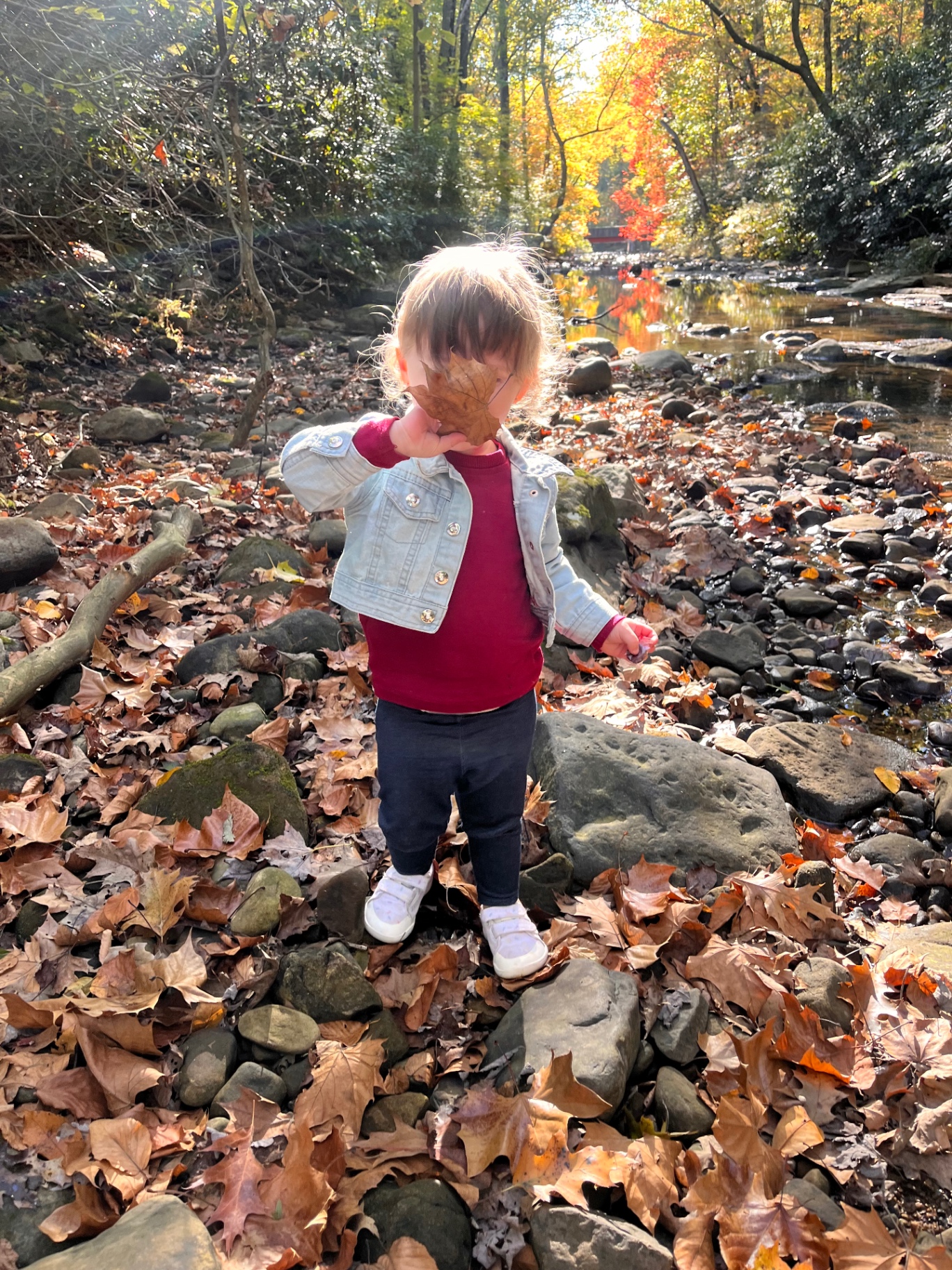
Fall is the collecting season, and collecting is the easiest entry into nature study because a child already wants to do it.
It is also the season with the clearest cause and effect outdoors. Every seed on the ground has a mechanism — a wing, a hook, a husk, a sweet coating — and a child can usually work out the mechanism by handling it for thirty seconds.
What to look for
Seed engineering
Sidewalks, lawns, roadside brush
September into November. Maple samaras spin, milkweed and thistle float, beggarticks and burdock hook onto socks, black walnut and hickory drop and stain. Sort a pocketful by how it travels instead of by species.
Acorns and mast years
Under any oak
Some autumns the ground is covered and some it is nearly bare. Oaks across a region synchronize heavy years. Count acorns in one square foot and write the number down; the comparison next year is the whole lesson.
Leaf color timing
Everywhere, moving downhill and south over weeks
Black gum and sumac turn scarlet first, often in September. Maples peak mid-October in most of the region, oaks last and hold brown leaves through winter. Color follows night temperature more than date.
Broad-winged and other migrating hawks
Ridgelines; the Kittatinny and Blue Ridge corridors
Mid-September for broad-wings, October and November for red-tails and eagles. Look for birds circling in a rising column, then peeling off in a line. A clear day after a cold front with northwest wind is the day.
Woolly bear caterpillars
Roads, driveways, lawn edges
October, crossing pavement. The band width predicts nothing about winter, which is a genuinely useful thing for a child to test and disprove with their own tally.
Fungi after rain
Stumps, mulch, base of dying trees
September and October. Chicken of the woods, turkey tail, and puffballs are the easiest to find. Photograph, do not taste.
Spider egg sacs and late orb weavers
Eaves, tall stems, garden corners
October. The papery sac left behind is a good winter object; it stays through February.
Three short walks
Sort by how it travels
Collect seeds for ten minutes, then arrange them on a porch step in four groups: fly, float, hitchhike, get eaten. Argue about the ones that fit two groups.
Match the leaf to the tree
Give each child one fallen leaf and ask them to find the tree it came from. Do not name anything. The looking-up part is the point.
One square foot, counted
Drop a loop of string on the ground under a tree and count everything inside it. Repeat in the same spot in November.
What to carry
- Bring an envelope, not a bag. It flattens, labels, and survives a coat pocket.
- Write the location on the envelope before you put anything inside it.
- Press three leaves, not thirty. The choosing is a skill.
A fall collection is worth keeping only if it is labeled. Date and place turn a pile of seeds into a record.
Something to carry outside
Our seasonal activity pages and printables are built for these walks — one page, one prompt, back outdoors.