December · January · February
Winter in the Mid-Atlantic
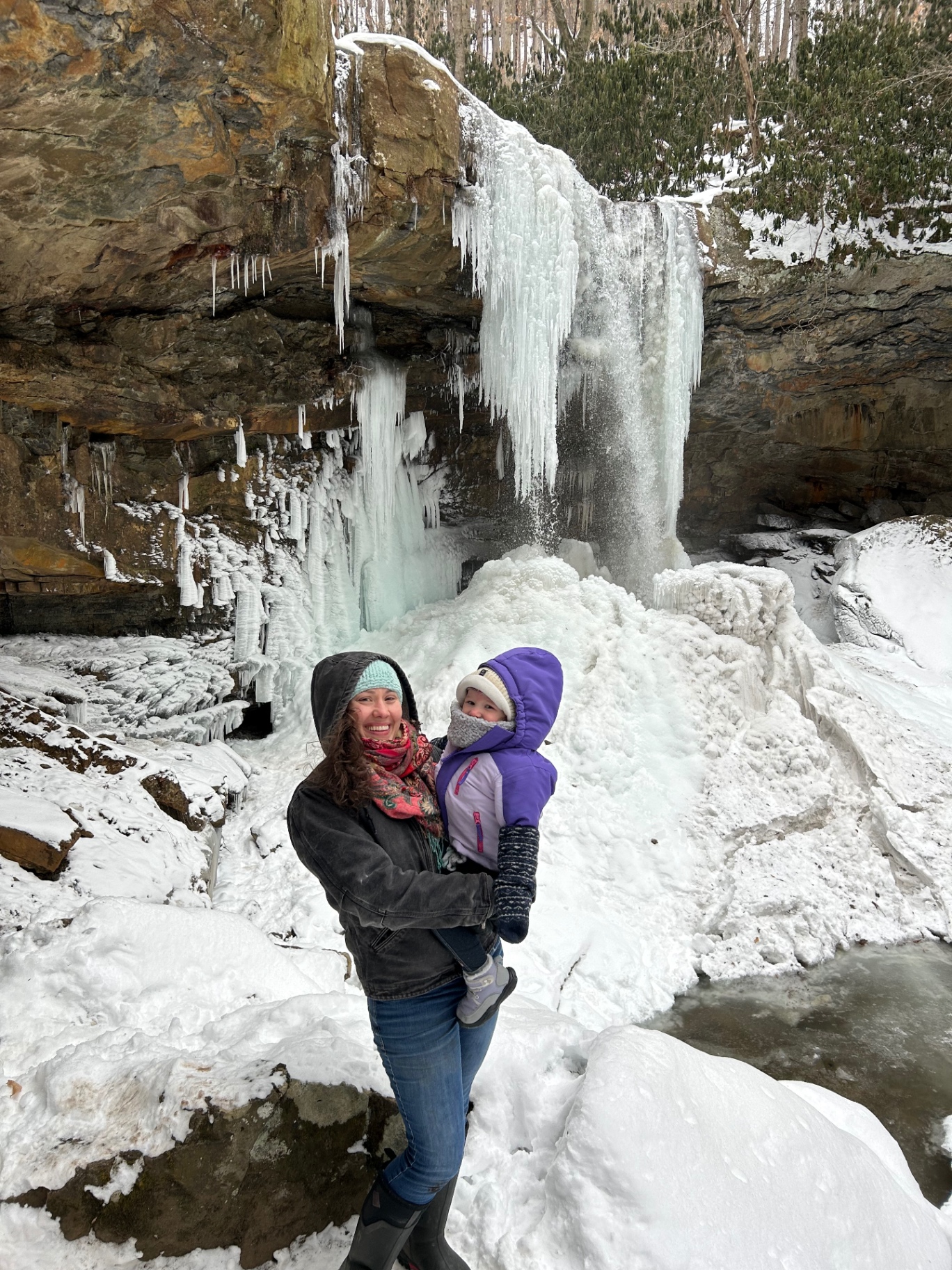
Winter is the season most families skip, and it is the one with the least clutter. With the leaves down, structure shows: nests, galls, bark, branching, the shape of a whole tree at once.
It is also the only season with a reliable record-keeping surface. Mud, snow, and frost hold tracks, and a track is a story a child can read without knowing a single species name.
What to look for
Tracks in snow and mud
Soft ground along fences, creek banks, and yard edges
All winter, best the morning after snow or rain. Deer split-hoof, squirrel bounding pairs, dog and cat, and the neat line of a fox. Measure the distance between prints, not just the print.
Abandoned nests
Shrubs and low branches now bare
December through February. They were there all summer and invisible. Leave them where they are; look at what they are made of instead — mud, hair, plastic string.
Winter buds and bark
Any street tree
Beech buds are long and sharp like a pencil point, sycamore bark peels to white, black cherry bark looks like burnt cornflakes. Trees are identifiable in January and it feels like a magic trick.
Feeder birds
A window
Chickadees, titmice, juncos, cardinals, downy woodpeckers, white-throated sparrows. Juncos are winter-only in most of the region and leave by April. Watch for ten minutes at the same time each day.
Galls and cocoons
Goldenrod stems, oak twigs
The round swelling on a dead goldenrod stem holds a fly larva. Split one open in February with an adult and look; leave the rest standing.
Ice formations
Puddles, seeps, edges of creeks
Needle ice pushing up out of bare soil on a cold morning, plate ice over a drained puddle. Both last about two hours after sunrise.
Great horned owls calling
Woodlots, even suburban ones
January nesting season, before dawn and just after dark. They are the earliest nesters in the region.
Three short walks
The ten-minute window count
Same window, same time, once a day for a week. Tally birds by look, not name. The week is what shows a pattern; a single sitting shows nothing.
Follow one track
Find a single set of prints and follow it as far as it goes. Ask what the animal was doing where the spacing changes.
Winter tree portrait
Draw the whole silhouette of one tree from the same spot, then draw it again in May. Keep both pages together.
What to carry
- Pencil, not pen. Ink stops working in the cold.
- Fifteen minutes outdoors is a complete winter session. Come back in warm.
- A ruler or a coin next to a track gives the drawing a scale.
Winter observation is short and frequent by necessity, which happens to be the way nature study works best all year.
Something to carry outside
Our seasonal activity pages and printables are built for these walks — one page, one prompt, back outdoors.