June · July · August
Summer in the Mid-Atlantic
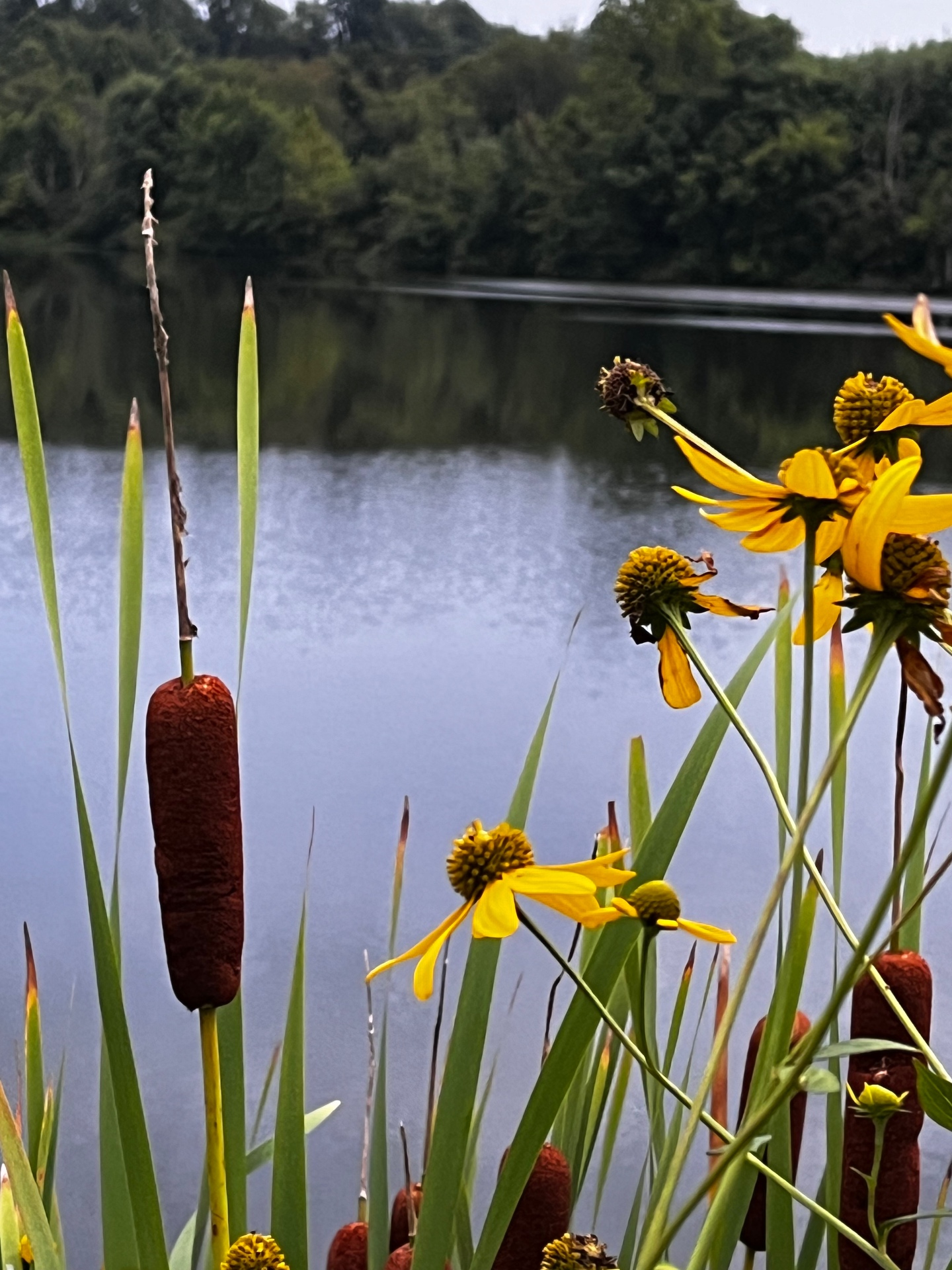
Summer here is loud, humid, and closer to the ground than people expect. The showy things — hawks, deer, big trees — go quiet and still. The interesting things get small.
This is the best season for a child to be a specialist. Insects, creek water, and roadside flowers are abundant enough that a five-year-old can find something new on a sidewalk between the car and the door.
What to look for
Fireflies
Unmowed edges, tall grass, damp lawns
Mid-June through July, starting about thirty minutes after sunset and peaking for roughly an hour. Different species flash in different patterns: a slow J-shaped swoop, a steady blink, a fast double. Try to name the pattern rather than the beetle.
Annual cicadas and their shells
Tree trunks, fence posts, porch screens
July and August. The empty amber exoskeletons stay put for weeks and can be collected without harming anything. The daytime buzz is the male; the sound comes from a drum-like organ, not the mouth.
Creek life under rocks
Any shallow riffle
All summer. Turn one flat stone in moving water, look for crayfish, mayfly and stonefly nymphs, and hellgrammites, then set the stone back exactly as it lay. Clean water holds more kinds.
Roadside wildflowers
Verges, alley edges, untended lots
Queen Anne's lace, chicory, common milkweed, black-eyed Susan, and later joe-pye weed. Chicory closes by early afternoon, which is a good observation in itself.
Monarch and swallowtail caterpillars
Milkweed, dill and parsley, spicebush, tulip poplar
July into September. Check the underside of milkweed leaves for eggs the size of a pinhead. A parsley pot on a step is enough habitat for black swallowtails.
Box turtle
Damp woods and yard edges after rain
Morning after a summer storm. If you move one, move it in the direction it was already heading, then leave it. They live decades within a few acres and get lost when relocated.
Orb weaver webs
Porches, garden stakes, between shrubs
August dawn, when dew makes the whole structure visible. Many species rebuild the web nightly, so it is a fresh drawing subject every morning.
Three short walks
Flash pattern map
On a July evening, draw the shapes you see in the air: a swoop, a dash, a dot. Do not chase or catch. You are recording a language, not a bug.
One stone, put back
In a shallow creek, allow exactly one rock to be turned per person per visit. The rule slows everything down and makes the choice matter.
Sidewalk transect
Walk one block and stop every ten steps to look down for five seconds. Tally what is alive. Most families are shocked by the count.
What to carry
- A jar with a lid you have poked holes in stays home. Observe where the animal is.
- Draw the cicada shell rather than the cicada; it holds still.
- Write the time next to each firefly observation. The hour matters more than the date.
The best summer nature site in the Mid-Atlantic is usually a damp edge nobody mows, within sight of a house.
Something to carry outside
Our seasonal activity pages and printables are built for these walks — one page, one prompt, back outdoors.